
The Femern Link is set to become the world’s longest immersed road and rail tunnel, connecting Denmark and Germany beneath the Fehmarn Belt. On a project of this scale, fire safety, emergency communication and real-time worker tracking cannot be add-ons. They have to be engineered into the site from day one.
A European megaproject with no equivalent
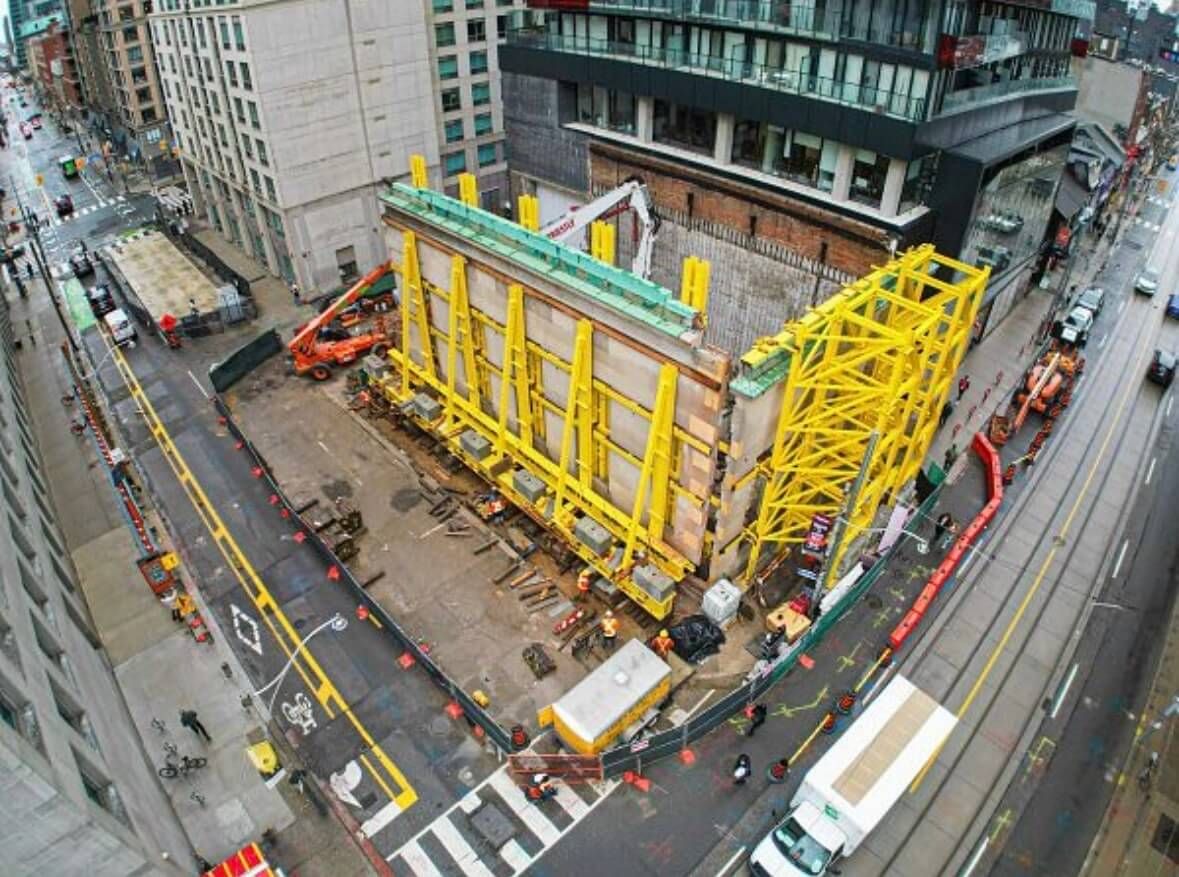
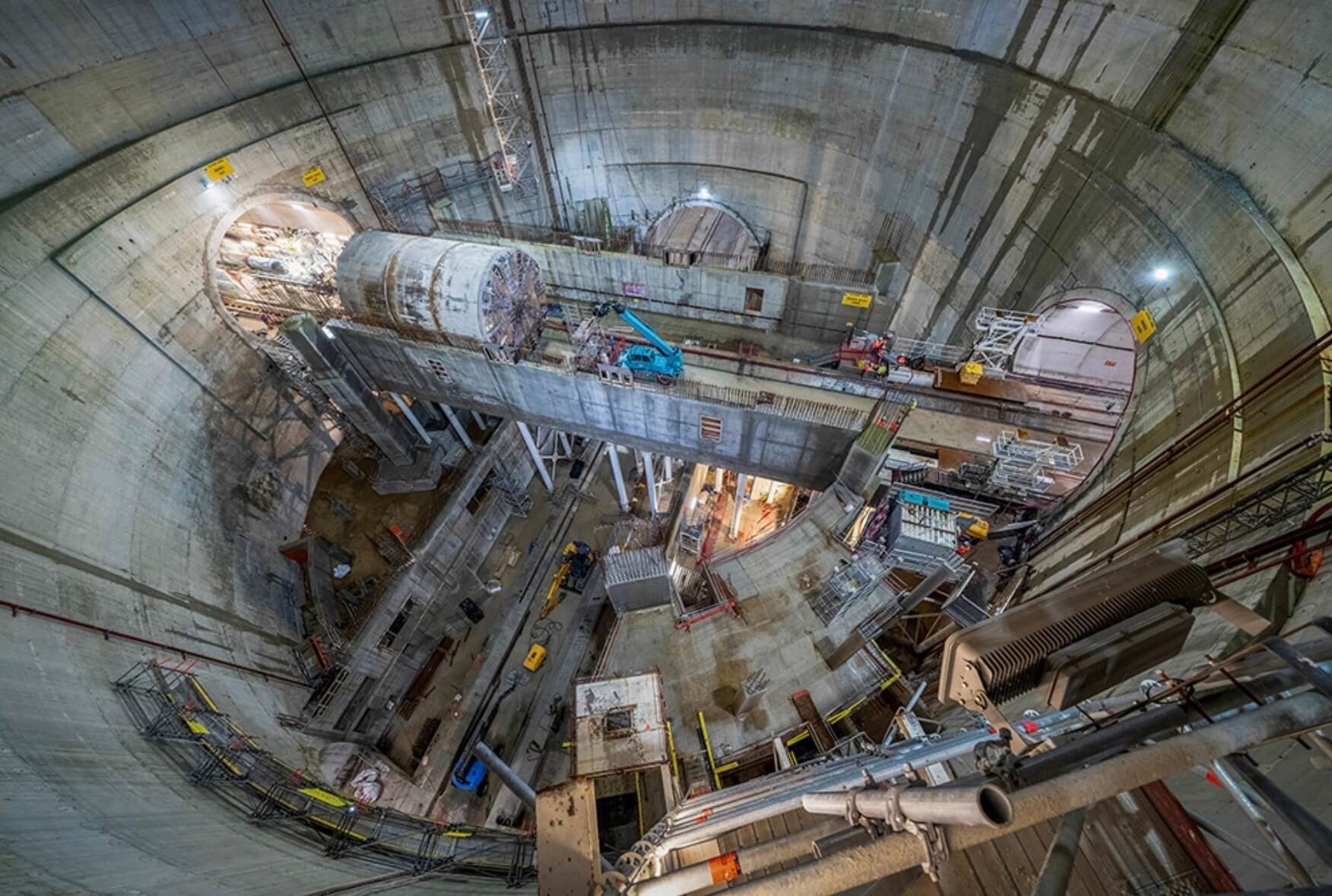
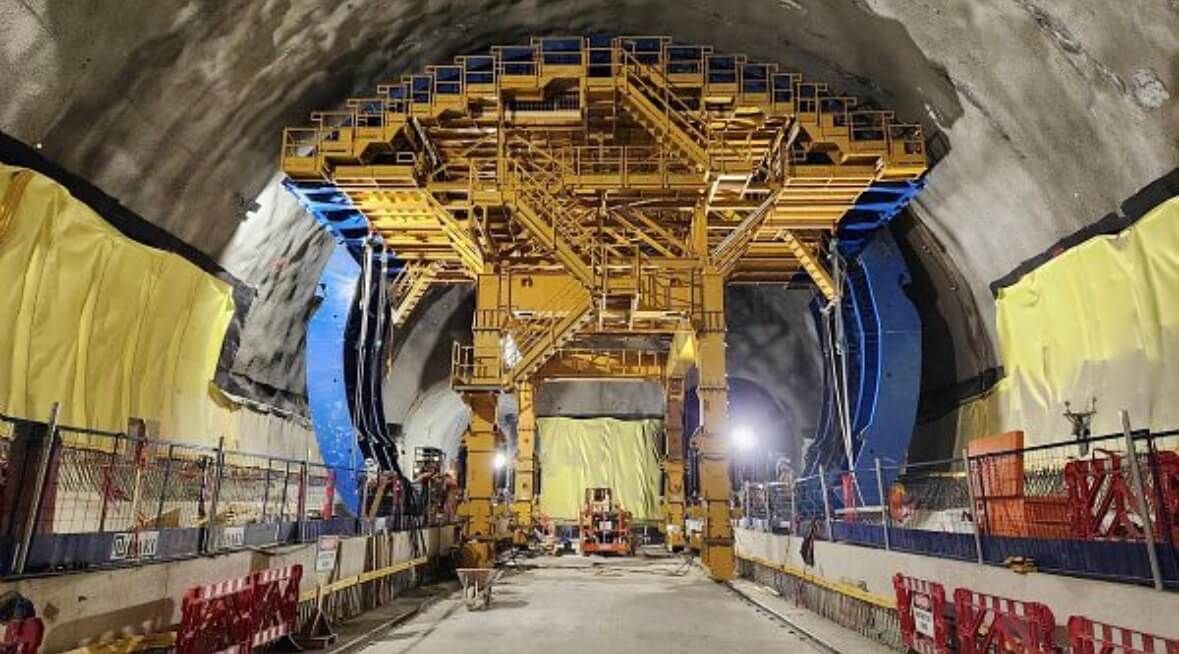
The Femern Link is one of the largest infrastructure programmes in Europe, delivered by the Femern Link Contractors (FLC) consortium. The immersed tunnel is built from prefabricated segments and combines a four-lane motorway, two electrified rail tubes and a dedicated service gallery, running for roughly 18 kilometres beneath the Fehmarn Belt. The scope extends well beyond the tunnel itself: a dedicated casting facility produces the immersed segments, while access ramps and bridges complete the works.
That diversity is precisely what makes worker safety so demanding. A single tunnel construction safety system has to operate across three very different environments at once: the immersed tunnel, an industrial prefabrication plant, and open-air construction zones. Each has its own fire risk profile, its own communication constraints, and its own evacuation logic.
Why confined space safety drives the design
Immersed tunnel construction is, by definition, confined space work. The alarm has to be raised early, it has to reach every worker, and the network carrying that information has to keep running even when part of the infrastructure is damaged. A fire or an incident that severs a cable cannot be allowed to silence the alarm or blind the supervision team to who is still underground.
This is the core principle behind the WISE approach to confined space safety: resilience first. The system is designed to degrade gracefully rather than fail completely, so communication and worker localisation continue across the site even after partial damage.
The WISE response: safety and industrial connectivity in one infrastructure
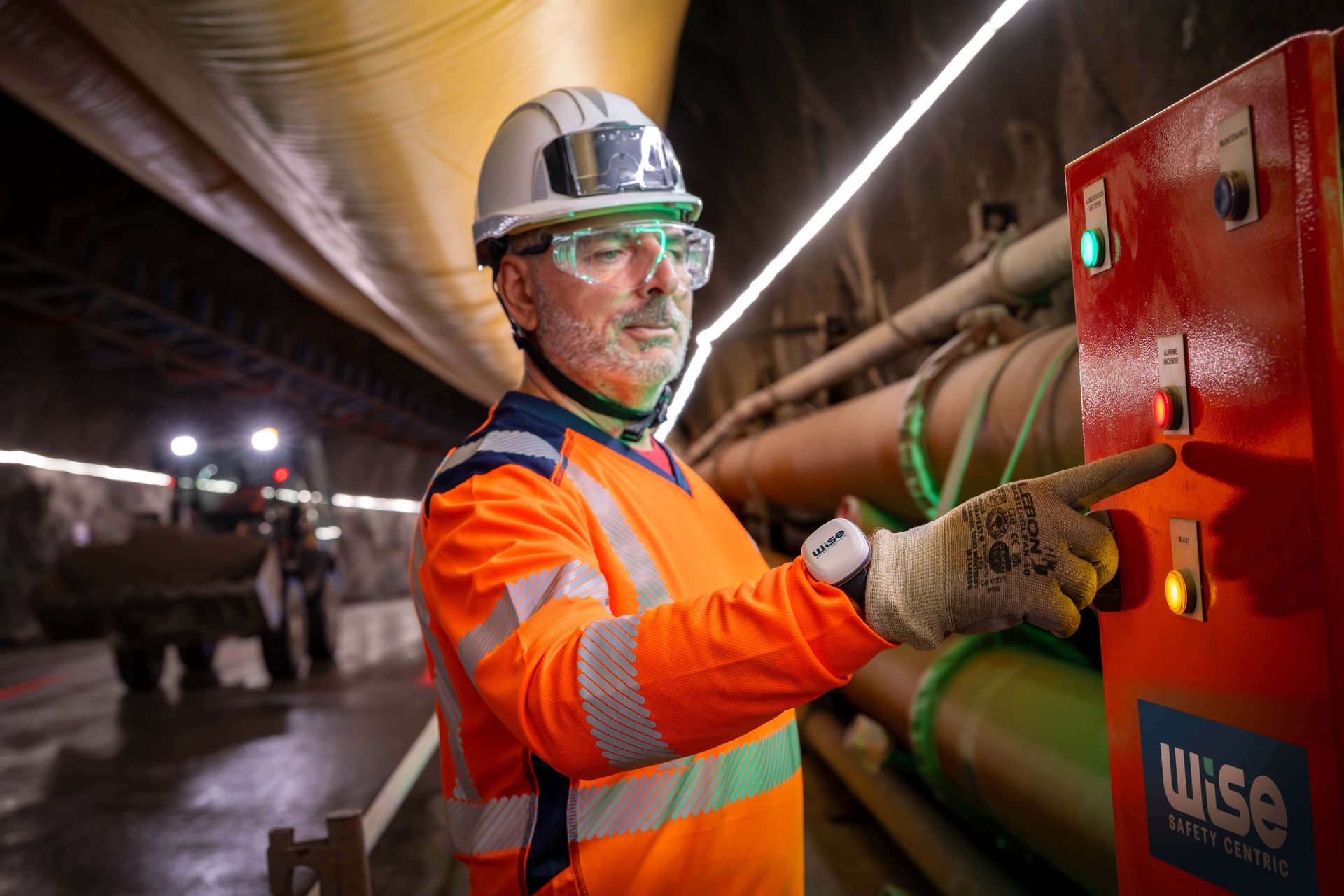
NEOAXESS deployed WISE Safety Centric, its integrated system combining three functions in a single infrastructure: a tunnel fire alarm system, an emergency communication system, and real-time worker tracking. Rather than stacking separate suppliers and separate networks, the project runs all three on one resilient backbone.
More than 600 industrial network devices
Beyond personnel safety, the Femern project required every piece of site equipment to interconnect. NEOAXESS provided the full network infrastructure to make that possible. More than 600 industrial network devices were deployed across the works to create a fully backed-up, centralised data exchange system. In practice, this means the safety layer and the operational data layer share the same hardened, redundant network, reducing cost and points of failure.
Designed to keep working under stress
The network combines fire-resistant fibre optic links with an independent, backed-up network layer for alarm propagation. If a fibre run is cut or a unit is destroyed, the system reroutes and the fire alarm still broadcasts. For a confined, kilometres-long immersed tunnel, that resilience is not a feature; it is the requirement.
The WISE safety system deployed here combines fire alarm, emergency communication and worker tracking on one network.
Key facts
- Roughly 18 km immersed tunnel: four-lane motorway, two rail tubes and a service gallery
- 600+ industrial network devices deployed
- Fully redundant, centralised data exchange system
- Coverage across immersed tunnel, casting facility and ancillary works
- Contractor: Femern Link Contractors (FLC)
- Location: Fehmarn Belt, between Rødby (Denmark) and Puttgarden (Germany)
- Project owner: Femern A/S